
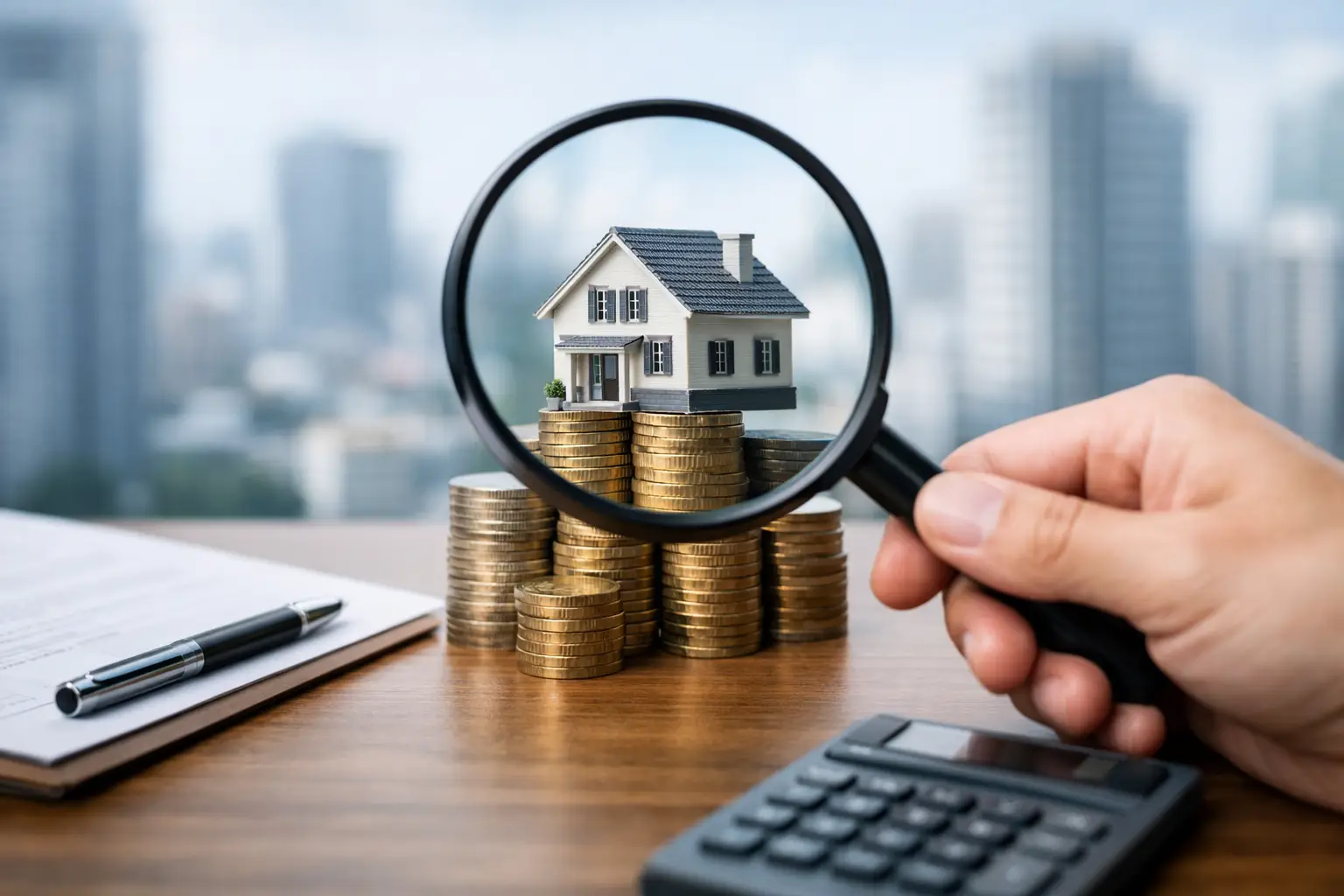
Paying $30,000 or $50,000 too much for a property doesn’t usually happen because of bad luck. It usually happens when the buyer falls in love with the promise before looking at the numbers. If you want to understand how to spot overpriced property, you need to look beyond the rendering, the commercial discourse and the artificial urgency that sometimes surrounds certain transactions, especially in dynamic markets such as Playa del Carmen, Tulum or Puerto Morelos.
A property can look attractive and yet be poorly priced. This happens both in resale and pre-sale. It also happens with apartments for vacation rentals, villas for patrimonial use or residential lots sold as an “opportunity” without a real analysis of the context. The key is not to look for impossible bargains, but to know if the asking value is related to the location, the product, the demand and the potential for future sales.
How to detect overvalued property without relying on the seller
The first filter is simple: compare, but compare well. It is not enough to see three similar ads in the same portal. You have to check properties that are really equivalent in terms of interior meters, terrace meters, age, amenities, use regime, maintenance level, community expenses and real distance to points of interest. An apartment six blocks from the beach does not compete the same as one one one block away, even if both say “prime zone”.
In Riviera Maya this point is even more delicate because many publications rely on broad or attractive area names. “Tulum”, for example, can mean very different price realities depending on access, infrastructure, area consolidation and supply pressure. A property may be within the commercial map of a desired area, but outside the logical range if its micro-location does not match.
Another clear indicator is the price per square meter. It should not be used in isolation, but as an initial reference. If a unit is well above the average for its segment, you need an objective explanation. That explanation could be an exceptional view, a scarce typology, superior finishes or a transaction with very favorable payment terms. If there is no concrete and measurable reason, you are probably looking at an inflated price.
The mistake of buying narrative instead of value
There are properties that are not sold for what they are, but for the story that surrounds them. “It’s going to go up a lot”, “it’s the next hot area” or “there’s the last unit left” are phrases that may or may not be true. The problem arises when the current price is already discounting overly optimistic future growth.
You see this a lot in presales. Buying early can be a good strategy, but not every presale is a good buy. If the exit value is already very close to or even above the finished product price in comparable developments, the margin narrows. In other words, you are assuming construction, timing and market risk without receiving a reasonable discount for doing so.
With resales something similar happens when the owner sets the price based on what he “needs to get” or what he invested in renovations, not on what the market is willing to pay. The wealthy buyer will sometimes tolerate a certain price premium if the property is a perfect fit for his or her lifestyle. The investor, on the other hand, should not do so unless there is a very specific strategic advantage.
Practical signs to detect an overvalued property
The first sign is that it has been published for too long without closing, but is still being advertised at the same price. In active markets, a properly priced property generates movement. If you are getting viewings, but no serious offers, the price is usually part of the problem.
The second is a return that does not add up. If the seller or developer promises high rental income, it pays to check it against actual occupancy, average rate, seasonality, operating costs and building constraints. A property may “perform well” on a commercial spreadsheet and not sustain that performance in practice. When the projected return requires overly optimistic assumptions, the price is likely to be above its investment value.
The third signal appears in the comparables. If similar properties in the same environment are closing clearly below, it is not enough that this unit has a nicer kitchen or designer furniture. The market pays extras, yes, but within certain limits.
The fourth is a vague justification of the price. When you ask why it costs more and the answer is summarized as “because the area is growing” or “because everything here is going up,” it lacks substance. A solid price is defended with data, not enthusiasm.
How to detect overvalued property in Riviera Maya
In this region there are variables that a foreign buyer usually overlooks. A property in a consolidated area with services, access and stable vacation operation is not the same as one in an area with the promise of future development, but not yet mature. Paper can withstand any projection; the market cannot.
Therefore, to understand how to detect overpriced property in Riviera Maya, it is advisable to review five layers at the same time: actual location, future liquidity, net profitability, product quality and supply pressure. If an area has too many similar units entering the market, the starting price should be analyzed more carefully. Abundance reduces resale power and makes it difficult to sustain rental rates.
Also important is the type of end buyer to whom this property could be of interest in a few years. A very expensive unit for its segment may find a buyer today because of commercial impulse, but suffer more at the time of resale. That is where many people discover that they bought at a premium, even though the asset “looked good” on paper.
The right price is not always the lowest
Detecting overvaluation does not mean discarding everything that is above average. There are properties that deserve a premium price. A clear view of the sea, an unrepeatable location, an uncommon distribution or an impeccable legal and documentary operation can justify it. The difference is that this premium must make sense for the use you are going to give it.
If you buy to live, you might accept to pay a little more for something that will provide you with quality of life for years to come. If you buy to invest, that extra should be reflected in higher demand, lower vacancy, better rates or better resaleability. If it does not translate into a real advantage, it ceases to be premium and becomes overpriced.
Here comes a criterion that many overlook: future exit. A smart buy is not only measured by how you get in, but how you might get out. An overvalued property usually offers more resistance when selling later, even in bull markets.
What to check before you commit
Before booking, ask for evidence. Not promises. Check closed comparables or, at least, serious market references. Analyze total costs, not just purchase price. In vacation rental oriented properties, land net income with conservative scenarios. And in pre-sales, compare the current value with the risk you assume for delivery time, licenses, equipment and start-up.
The payment structure also deserves attention. Sometimes an apparently high price is improved if it includes an advantageous financial plan or hard-to-find conditions. Other times the opposite happens: the price seems competitive, but the added costs make it skyrocket. The strategic thing to do is to evaluate the entire operation.
If you are buying from outside, distance works against you because you depend more on what you are told. In this case, a consultative support makes a difference. Not to stop a purchase by system, but to help you separate real value from marketing. This is, in fact, one of the major filters that we apply at Roberto Reyes Real Estate Broker when a client is looking to invest with criteria and not just on impulse.
Buying well is not about chasing the lowest price, it’s about paying the right price for an asset that makes sense for your goals. If a property interests you, don’t just ask if you like it. Ask if that price is supported by data, market and future exit. When you make that pause, you buy with clarity, without fear and with strategy.


