
There is a huge difference between a property that looks good in pictures and one that actually works in rentals. When someone asks me about the best amenities for vacation investment, I almost never start by talking about hot tubs, rooftops or gyms. I start with a more uncomfortable question: what amenities make a guest book, leave a good review and want to come back without driving up operating costs?
In Riviera Maya I have seen projects sell very well in pre-sales because of a long list of amenities, but once in operation many of them weigh more in maintenance than in revenue. I have also seen simpler units, but better thought out, maintain a more stable occupancy because they understand how guests travel today and what they are willing to pay. That is the real point of analysis.
What it means to choose the right amenities
An amenity should not be evaluated by how attractive it looks in the brochure, but by its impact on three variables: occupancy, rate per night and operating cost. If it improves only one of the three, it should be reviewed to see if it makes sense. If it improves two or three, it starts to make sense.
In Playa del Carmen, for example, an attractive pool can go a long way for short stays, especially when the guest compares several similar options. But in areas where people spend more time outside the condo, that same pool may not justify high maintenance fees. In Tulum this happens frequently: very aspirational concepts are sold, but the daily operation ends up showing what was useful and what was just marketing.
Therefore, talking about the best amenities for vacation investment implies understanding the type of buyer, the guest profile and the micro market. A property oriented to couples is not the same as a property oriented to families, digital nomads or groups of friends.
The best amenities for vacation investment do depend on the profile of the guest.
If your unit is intended for 2-4 night stays, the guest usually values immediate comfort and visual experience. They want to arrive easily, enter without friction, have good internet, sleep well, use a nice pool and feel that the space is worth what they paid for. In that scenario, there are amenities that do move the needle consistently.
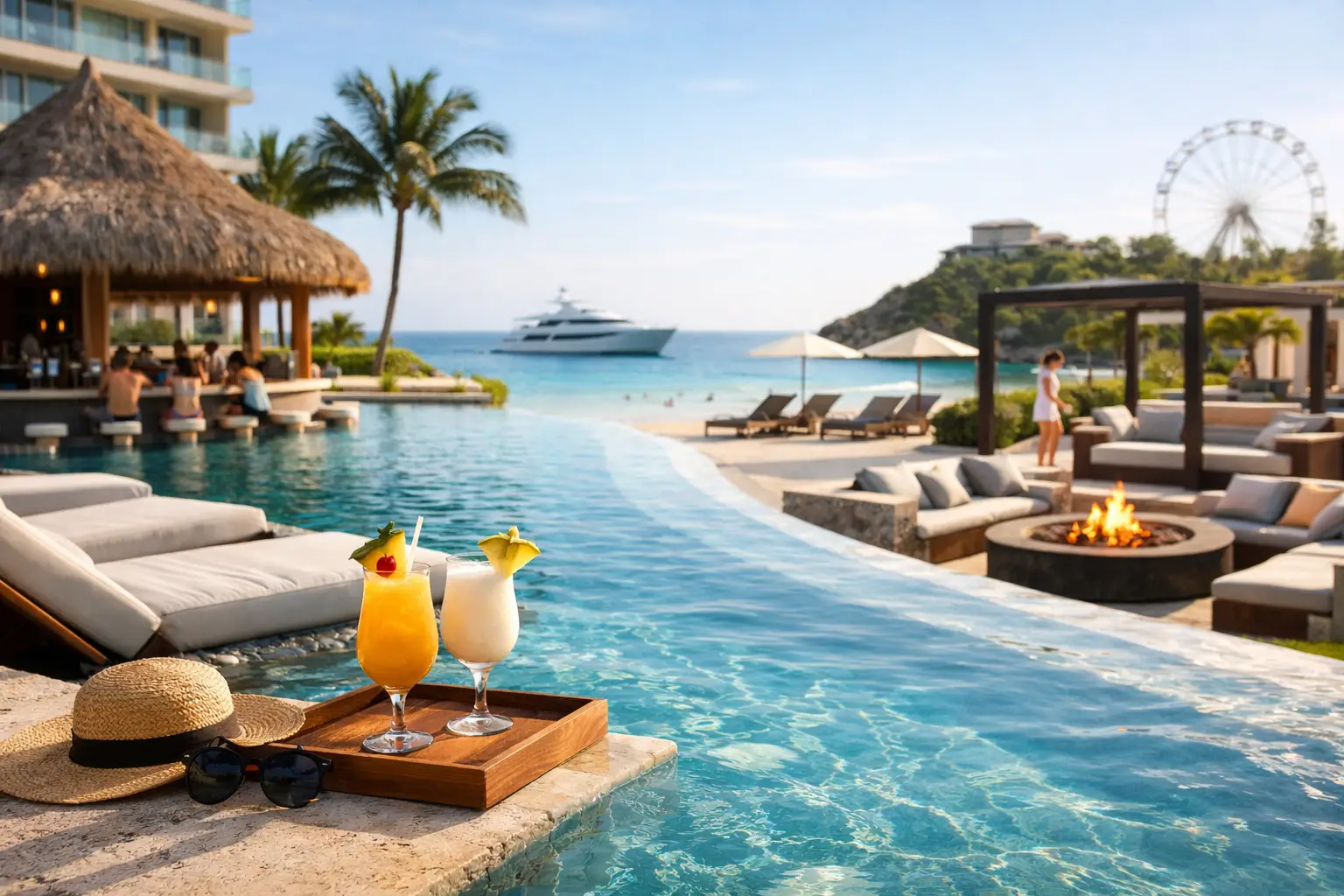
The first is a functional and well-designed pool. I’m not necessarily talking about a huge pool, but a clean, pleasant, photogenic and easy to maintain space. In vacation rentals, perception matters because it influences clicks, bookings and reviews. If there are also shaded areas, decent furniture and good lighting, the perceived value goes up more than many people think.
The second is real connectivity. Many people still underestimate this. Good internet is no longer an extra, it is part of the minimum infrastructure. In Riviera Maya, where an important part of the demand mixes vacations with remote work, stable wifi and a useful area to work in have more impact than flashier amenities. I have seen apartments with an average design perform better than more spectacular ones just because they solved this need well.
The third is operational security. Controlled access, functional reception or well-designed autonomous entry systems make a clear difference. The guest appreciates arriving smoothly, especially if he or she is landing late or coming from abroad. And the investor benefits as well: less operational friction usually translates into fewer incidents and better evaluations.
Then there are the basic wellness amenities, which in this market are usually provided: small but usable gym, rooftop with a pleasant stay, parking when the area requires it, elevator if the product targets a certain segment, and laundry or laundry center inside the unit or building. These are not aspirational amenities. They are amenities that reduce objections.
Amenities that help you get paid better, but not in all cases.
This is where it is important to clarify. There are amenities that do allow you to push rates, although they do not always increase occupancy proportionally.
A private jacuzzi, plunge pool or large terrace can work very well in properties geared toward couples or weekend getaways. In Tulum, for example, this can influence the booking decision, especially in segments where aesthetics and experience are more important. The problem comes when the cost of maintenance, electricity consumption or repairs starts to eat into the rate differential.
Something similar happens with elaborate rooftops. A well-executed common rooftop can add value. But when the project carries too many operational elements – bar, fire pits, multiple bodies of water, delicate furnishings – the fees can go up without the additional income to match. In the long run, that equation matters more than the initial photo.
The gym also falls into this category. Yes, it helps, especially for stays of a week or more. But between a full gym and a small, well-ventilated gym that is sufficient for the basics, often the financial return doesn’t change as much as the developer thinks.
Amenities that often sell well, but operate poorly
This is the part that almost no one explains clearly. There are amenities that help to place units in the commercial stage, but then generate operational problems, wear and tear or high fees.
The most common are underutilized spas, overdesigned business centers, courts that are hardly used, huge social areas for small buildings or hybrid concepts that sound good on paper but do not respond to the real use of the guest. When the condominium needs constant replacements, more staff or specialized maintenance, this ends up impacting the owner.
There is also a common mistake in resort developments: focusing on common amenities and neglecting functionality within the unit. In vacation rentals, a comfortable bed, good water pressure, efficient air conditioning, reasonable noise isolation and a practical kitchen have more influence on the review than a social room that no one uses.
I have seen this failure many times in new projects in the region. The investor buys thinking about the visual promise of the complex, but the guest evaluates the whole experience. And that experience happens, above all, inside the apartment.
How to evaluate amenities with investment criteria
If you’re comparing properties, I would review amenities like I review any other buying factor: with numbers and with context. First, ask yourself if that amenity helps sell more nights or just decorates the commercial narrative. Then, review how much it costs to maintain it and how that cost is spread out in fees.
It is also advisable to look at the direct competition. If the majority of comparable properties in an area already offer a pool, controlled access and rooftop, these amenities cease to be a differentiator and become standard. Then the question changes: it is not whether they add up, but whether you would be at a disadvantage for not having them.
In downtown Playa del Carmen, for example, there are segments where pedestrian proximity to restaurants, beach and services is so important that certain building amenities lose relevance. On the other hand, in planned communities or more residential areas, guests do expect to spend more time within the complex. The urban context changes the value of each amenity.
Another key point is the management profile. Not all amenities are equally easy to operate if you live outside of Mexico or if you plan to delegate management. The more complex the amenity, the more you depend on solid management. If that part is not well taken care of, what seemed like an advantage can become a trouble spot.
Best amenities for vacation investment in Riviera Maya
If I ground this conversation in the Riviera Maya market, the amenities that make the most sense are those that combine frequent use, high perceived value and reasonable operation. An attractive pool, reliable internet, secure access, pleasant outdoor spaces, well-thought-out lounge areas and a functional unit tend to work better than long lists of little-used extras.
If the product is aimed at premium short stays, a private terrace, plunge pool or rooftop with good execution can add up to quite a lot. If the focus is on medium stays or digital nomads, then internet, ergonomics, storage, isolation and ease of daily living are more important. And if you are talking about a family product, elevator, parking, security and children’s pool may be more valuable than a more sophisticated concept.
There is no universal formula. What there is is a smarter way to read the market. The best amenities for vacation investment are not necessarily the most expensive or the flashiest. They are the ones that respond to actual guest behavior, protect your margin and help the property remain competitive two or three years after purchase, not just the day they show it to you.
If you are valuing a vacation rental property, look less at the rendering and more at the future operation. That’s where a good property decision is usually made.


